Design. Develop. Source. Manufacture.

Private Label

Brand a confirmed base style within agreed limits. Check the actual product, permitted changes and commercial conditions before approving artwork or quantities.

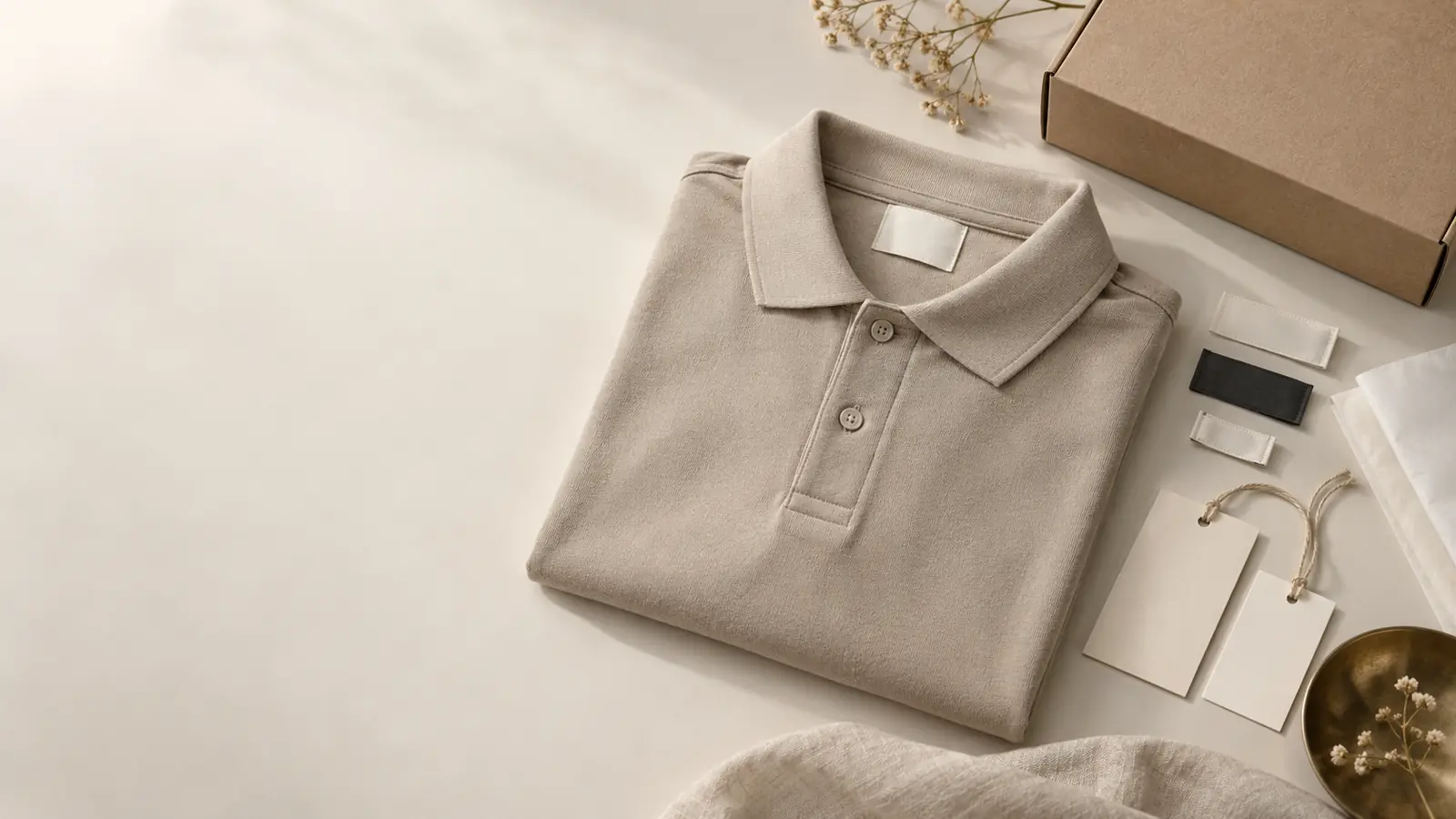
AI-generated private-label concept — not actual products, stock or production evidence.

Planning guide · Services, fees, availability and commitments require project-specific confirmation.

Prepare the starting information

Use named files and revisions. Mark missing information instead of guessing it.

Base style & version
Actual supplier/style reference, product version, specification and the availability evidence to review. A concept picture alone is insufficient.
Branding files
Authorised logo and label artwork, dimensions, colours, placement and proposed decoration method. Separate artwork proof from finished-product approval.
Colour & size mix
Requested quantities by colour and size, counting unit and whether the request changes the existing material or fit. Availability must be confirmed.
Labels & packing
Care-information direction, destination, hangtags, label attachment, individual packing and carton requirements.
Change boundaries
List requested changes and what must remain unchanged. Structural, fit or material changes may need a different development route.

Move through documented approval gates

A proposed review sequence, not an automatically active project. Agree the actual owners, deliverables and release conditions.

  1. Confirm the base style

    Review the real product reference, version, source, specifications and permitted use. Check stock or production mode where relevant.

    Approval record: Written confirmation of the actual base style and supply conditions; no availability is inferred from a concept.

  2. Define branding & quote

    Review artwork, decoration method, label/packing needs and the quantity basis for both garments and branding components.

    Approval record: Agreed changes, inclusions, minimums, costs and approval conditions.

  3. Review the branded reference

    Plan an artwork proof, decoration sample or complete sample as appropriate to the agreed scope.

    Approval record: Record exactly what each proof/sample approves; a digital proof alone does not approve fabric, fit or finished decoration.

  4. Release the order version

    Confirm the base-style version, approved artwork, placement, size/colour allocation and packing information.

    Approval record: Written release with any unresolved items closed or explicitly handled; confirm commercial and booking conditions.

  5. Production & dispatch review

    Check the agreed product and branding criteria, version consistency and packing. Review deviations before release.

    Approval record: Recorded inspection/disposition and dispatch instructions; repeat orders still need current availability and terms.

Keep a date, revision, decision, approver and unresolved items for each gate. Do not treat a website brief, email acknowledgement or sample photo as a production release.

Make the quote comparable

Costing should name the version and assumptions it covers, not just a per-piece number.

Base product
Identify supply mode, product revision, confirmed specifications and any outstanding availability condition.
Branding components
Separate label, decoration, packaging and setup costs; identify component minimums and any residual-stock handling.
Allowed changes
Record approved modifications and changes excluded from this quote. A new fit or material may require development.
Repeat orders
Reconfirm product/artwork versions, available colours/sizes, quantity rules, pricing validity and timing for each replenishment.
Quantity & minimum basis
List style/colour/size allocation and units. Confirm whether minimums apply per style, colour, component or order; 300 pieces is not a universal rule.
Cost & timing boundaries
Record currency, price validity, sample/shipping costs, packing, destination and agreed trade/cost scope. Identify approvals, material availability and booking dependencies.
Evidence & acceptance
Identify required product-specific reports, review methods, inspection criteria and who resolves deviations. A generic material description is not a verified performance claim.

Record changes before affected work continues

Use a dated change note linked to the last approved baseline.

Identify the request
Style ID, current revision, feature or measuring point, requested change and reason.
Review the impact
Affected drawings, materials, samples, quantity, costs, timing and evidence; distinguish a correction from a new requirement.
Approve & re-baseline
Record the decision and approver. Identify additional charges or re-sampling before work is authorised. Supersede old files clearly.
Reorder control
Identify the approved product and artwork versions, then reconfirm current sourcing, quantity rules, price and timing. A past order does not guarantee unchanged terms.

Keep decisions connected to the product

Carry the same reference from category brief to sample and production planning.

Questions for this route

Commercial and development terms are confirmed for the actual project.

Can I private-label one of the concept products immediately?

No availability is established by a concept. First confirm a real base style, supply source, specifications, permitted changes and commercial conditions.

Can private label include a new fit or construction?

Such changes may exceed the base-style scope. Review them separately and choose OEM or ODM if additional pattern, material or technical development is required.

Can garment and label minimums differ?

Specify each basis in the quote, including units and any leftover component handling. This page promises no universal minimum or permitted mix.

Is an artwork proof the final product approval?

No. Identify its limited scope and separately review the actual decoration, base product, fit and packing as required by the agreed approval plan.

Prepare your private-label brief.

The project page prepares a downloadable brief for manual email follow-up. It does not upload attachments, accept an order or confirm a quote.

Prepare this brief